Analysis / Energy
Can distributed controls make grids more adaptive without weakening reliability?
State of Autonomous Grid Systems — 2026 Q1
Grid autonomy is emerging where energy storage, distributed generation, sensors, and control software meet physical infrastructure.
Current state
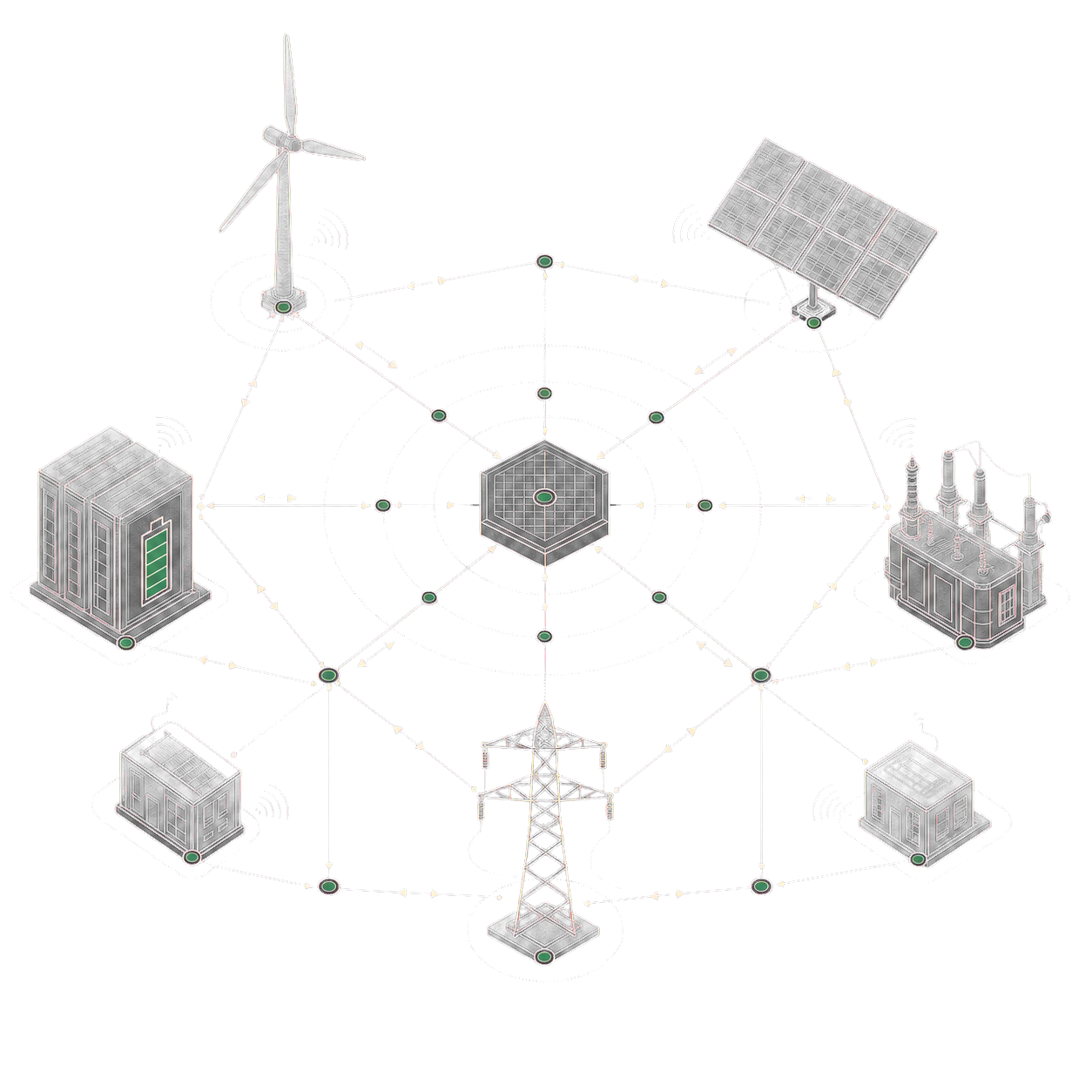
Power grids are becoming more complex at the edge. Storage, distributed generation, flexible demand, and local sensors create many more points where supply and demand can be balanced, not only at centralized nodes but across local networks. The operating surface is becoming wider, more local, and more time-sensitive.
That complexity makes software and control systems more important. The grid is still physical infrastructure, but forecasting, dispatch, communication, and automated response increasingly determine how resilient it can be under stress. The control layer is becoming part of reliability, not just a monitoring surface.
What changed
Storage is no longer just a passive buffer. Batteries can provide frequency response, local balancing, backup capacity, and price-sensitive dispatch. As the number of controllable devices increases, centralized dispatch becomes harder to rely on alone, and more decisions move closer to the edge of the network.
The grid remains physical infrastructure, but sensing, forecasting, control loops, and automated response increasingly determine how resilient it can be. Automated local balancing is likely to become a standard grid function, with storage, software, and real-time pricing becoming coordination tools rather than add-ons to a centralized power system.
Constraints
Interconnection delays
Grid interconnection queues slow new generation and storage, limiting how quickly flexible capacity can come online.
Local regulation
Local regulation determines how fast distributed assets can connect and what services they are allowed to provide.
Operational resilience
Control systems must remain resilient under cyber incidents, weather stress, equipment failure, and communication outages.
Market lag
Market design often lags behind technical capability, slowing the incentives that would reward flexible local coordination.
Impacts
For utilities
Planning shifts from centralized capacity alone toward orchestration of storage, flexible demand, distributed generation, and local constraints.
For builders
Useful systems must combine forecasting, dispatch, device integration, failure handling, and operator trust rather than isolated optimization demos.
For regulators
Connection rules, market participation, cybersecurity expectations, and local reliability standards determine how quickly autonomy can scale.
For markets
Price signals, flexibility payments, and capacity value will shape which storage and control systems become economically durable.
What to watch
Interconnection reform
Queue rules and faster connection pathways will determine how quickly storage and distributed assets can support the grid.
Real-time pricing
Granular prices will show whether flexible demand and storage can respond to local grid conditions at scale.